









Sufism and the Ethical Reconstruction of Homo Islamicus: Challenging Economic Rationalism and Secular Moralism
Abstract
This study examines the limitations of the contemporary economic paradigm, which prioritizes economic rationality while neglecting ethical and spiritual dimensions. The study aims to develop an alternative framework based on Sufi principles to reconstruct the concept of homo Islamicus, harmonizing economic rationality with moral and spiritual awareness. The data employs qualitative methods, including a literature review. The data were collected through documentation, and then they were analyzed descriptively and analytically. The findings reveal that Sufism emphasizes moderation and consistent ethical values, thereby overcoming the limitations of homo economicus and secular morality. This approach offers an economic paradigm that prioritizes social justice, mashlahah (public welfare), and a balance between material and spiritual success. This study contributes significantly to the development of sustainable and beneficial Islamic economics.
Keywords
Full Text:
PDFReferences
Al-Ghazali, I. (2015). Arba’in fi Ushuliddin. FAZA Publications Enterprise.
Al-Ghazali, I. (2017a). Arbain fii Ushuludin : Bab Asas Penyucian Hati (M. J. Juhan & A. Yahya (eds.)). Darul Syakir Enterprise.
Al-Ghazali, I. (2017b). Ihya’ Ulumiddin Jilid 5 Bahaya Lisan Terjemahan (Second ed). Republika.
Al-Ghazali, I. (2017c). Ihya’ Ulumiddin Jilid 7 Pintu Taubat (Second ed). Republika.
Al-Jauziyah, I. Q. (2004). Kunci Kebahagiaan: Ibnu Qoyyim Al Jauziyah (p. 509).
Al-Malibari, S. Z. (1990). Irsyadul Ibad Ila Sabilir Rasyad. Darul Fikr.
Al-Maqdisi, I. A. I. ‘Abdu’l R. I. Q. (2019). The Refinement of Character: A Translation from Arabic of Ahmad Ibn-Muhammad Miskawayh’s Tahdhib Al-Akhlaq. Dar as-Sunnah Publishers.
al Ghazali, I. (2013). Minhajul Abidin. Khatulistiwa Press.
al Kurdi, S. M. A. (2006). Tanwir-Al-qulub-Fi-Mu-Amalat-Allam-Al-ghuyub. Darul Fikr.
An-Nisaiburi, A. Q. A. K. H. al-Q. (2007). Ar-Risalatul Qusyairiyah fi Ilmit Tashowwuf (Cetakan Ke). Pustaka Amani.
Arini, N. W., Purwanto, Y., Hanifah, D. S., Soblia, F., Fuji, A., & Rachmad, N. (2024). The Implementation of Anti-Corruption Education and Sufism Studies in Strengthening Morality of Future Generation. 1(1), 343–352.
As-Sya’rani, S. A. W. (1996). Lawaqih al Anwar al Qudsiyyah fi Ma’rifati Qawa’id As Shufiyyah. Darul Fikr.
Atha’illah, S. A. ibn M. ibn. (1991). Hikam. Darul Kutub al-Ilmiyyah.
Ayuningtyas, N. C., & Subekti, ,. (2022). Urgensi Perlindungan Hukum Bagi Korban Pornografi Balas Dendam (Revenge Porn). Recidive : Jurnal Hukum Pidana Dan Penanggulangan Kejahatan, 10(3), 164. https://doi.org/10.20961/recidive.v10i3.58954
Azalia, L., Muna, L. N., & Rusdi, A. (2018). Kesejahteraan Psikologis Pada Jemaah Pengajian Ditinjau Dari Religiusitas Dan Hubbud Dunya. Psikis : Jurnal Psikologi Islami, 4(1), 35–44. https://doi.org/10.19109/psikis.v4i1.2159
Baried, A. B. (2023). Sufisme and Business: Study of Social and Business Activities of the Tarekat Al-Idrisiyyah in Indonesia. Jurnal Studi Agama Dan Masyarakat, 18(2), 116–129. https://doi.org/10.23971/jsam.v18i2.3808
Barom, M. N. (2018). Conceptualizing A Unified Normative Framework For Social Responsibility In Islamic Economics. International Journal of Economics, Management and Accounting, 2(2), 329–363.
Creswell, J. W., & Creswell, J. D. (2018). Research Design Qualitative, Quantitative, Mixed Methods Approaches. In Research Design: Qualitative, Quantitative, and Mixed Methods Approaches (5th ed.). SAGE Publications, Inc.
Daulay, H. P., Dahlan, Z., & Lubis, C. A. (2021). Takhalli, Tahalli, dan Tajalli. Pandawa: Jurnal Pendidikan Dan Dakwah, 3(3), 348–365.
Esfahani, M. (2022). Homo ethicus oder der Mensch in seiner moralischen Verantwortung Eine islamische Perspektive. The Turn, 4. https://doi.org/http://dx.doi.org/10.53100/74492414846
Fahlevi, R. (2015). Implementasi ma ṣ la ḥ ah dalam kegiatan ekonomi syariah. JURIS (Jurnal Ilmiah Syariah), 14(2), 225–233. https://doi.org/http://dx.doi.org/10.31958/juris.v14i2.310
Fathurahman, S. M. (2016). Jalan Menuju Tuhan "Memahami dan Mengamalkan Islam Secara Komprehensif dan Terpadu ". PT. Grasindo.
Fathurahman, S. M. (2020a). Tasawuf Berkarakter SIMPATIK (Simpel, Praktis & Komprehensif) 1 (D. U. S. M). Mawahib.
Fathurahman, S. M. (2020b). Tasawuf Berkarakter SIMPATIK (Simpel, Praktis & Komprehensif) 2 (Dewan Ulum Shufiyah Majelis Ketarekatan Idrisiyyah (ed.); 1st ed.). Mawahib.
Fathurahman, S. M. (2022). Tasawuf Berkarakter SIMPATIK (Simpel, Praktis & Komprehensif) 3 (Dewan Ulum Shufiyah Majelis Ketarekatan Idrisiyyah (ed.); 1st ed.). Mawahib.
Faujiah, A., & Elfairuza, Z. (2019). Filosofi Syukur Dalam Perspetif Ekonomi Islam. EKOSIANA: Jurnal Ekonomi Syari’ah, 6(2), 38–59.
Fika, D. R. (2025). Kejaksaan Agung Jelaskan Asal-Usul Kerugian Rp 300 Triliun dalam Korupsi Timah. TEMPO.CO.
Furqani, H., & Echchabi, A. (2022). Who is Homo Islamicus? A Qurʾānic perspective on the economic agent in Islamic economics. ISRA International Journal of Islamic Finance, 14(2), 206–220. https://doi.org/10.1108/IJIF-05-2021-0102
Hammond, K. (2003). The Great Depression. Polymers Paint Colour Journal, 193(4464), 24–26. https://doi.org/10.1017/chol9780521553087.006
Hasan, A., & Sahudin, D. (2022). Relevansi Pemikiran Tasawuf Syekh Nawawi Al- Bantani Dengan Ekonomi Islam. Syifa Al-Qulub: Jurnal Studi Psikoterapi Sufistik, 06(02), 126–138.
Hasan, Z. (2016). Evolution of Islamic Economics: A critical analysis. ISRA International Journal of Islamic Finance •, 8(2).
Hidayat, M. A., & Hasan, A. (2021). The Relevance of Akhlaqi Sufism to Economic Behavior: Thoughts of Shaykh Abdul Qodir Al-Jailani. Cakrawala: Jurnal Studi Islam, 16(1), 29–42. https://doi.org/10.31603/cakrawala.4299
Ibn Arabi, A.-S. A.-A. M. (2015). Al-Futuhat Al-Makkiyah. Darul Futuhat.
Ibrahim, A., Amelia, E., Akbar, N., Kholis, N., Utami, S. A., & Nofrianto. (2021). Pengatar Ekonomi Syariah. In R. Ismal & A. Sakti (Eds.), Departemen Ekonomi dan Keuangan Syariah - Bank Indonesia (Edisi Pert). Departemen Ekonomi dan Keuangan Syariah - Bank Indonesia.
Idris, S. A. bin. (2006). Al-’Iqdun Nafiis Nudzumi Jawaahiri at-tadris. Dar Jawamil kalam.
James, P., Magee, L., Scerri, A., & Steger, M. (2014). Urban sustainability in theory and practice: Circles of sustainability. In Urban Sustainability in Theory and Practice: Circles of sustainability (Issue October 2022). https://doi.org/10.4324/9781315765747
Khaldun, I. (2015). The Muqaddimah – An Introduction to History (F. Rosenthal trans.). PRINCETON UNIVERSITY PRESS.
Maharani, S. D. (2016). Manusia Sebagai Homo Economicus: Refleksi Atas Kasus-Kasus Kejahatan Di Indonesia. Jurnal Filsafat, 26(1), 30. https://doi.org/10.22146/jf.12624
Mele, D., & Canton, C. G. (2014). The Homo Economicus Model Overview. Human Foundations of Management, 4, 41–45.
Miles, M. B., Huberman, A. M., & Saldana, J. (2014). Qualitative Data Analysis A Methods Sourcebook. In Sustainability (Switzerland) (Editon 3, Vol. 11, Issue 1). SAGE Publications, Inc.
Mill, J. S. (2007). On the definition and method of political economy. The Philosophy of Economics: An Anthology, 1836, 41–58. https://doi.org/10.1017/CBO9780511819025.003
Mironski, J., & Lenk, F. (2016). Homo Oeconomicus Versus Homo Ethicus. Journal of Management and Financial Sciences, 26(4), 97–123.
Muhid, H. K. (2025). Perjalanan Kasus Dugaan Korupsi Pertamina, Kejagung Periksa 8 Saksi. TEMPO.CO.
Munandar, S. A. (2023a). Social and Economic Sufism: The Development and Role of Sufism in the Digital and Modern Era. Jurnal Kawakib, 4(1), 13–27. https://doi.org/10.24036/kwkib.v4i1.112
Munandar, S. A. (2023b). Tasawuf sebagai Kemajuan Peradaban: Studi Perkembangan Sosial dan Ekonomi Tarekat Idrisyyiah di Tasikmalaya. Harmoni Jurnal Multikultutral & Multireligius, 22(1), 208–233. https://doi.org/https://doi.org/10.32488/harmoni.v22i1.677
Mutmainnah, M., Fahimatussyam, A., & Rakhman Wijaya, A. (2023). Fenomena Flexing Dalam Ekonomi Islam. Jurnal Econetica: Jurnal Ilmu Sosial, Ekonomi, Dan Bisnis, 5(1), 30–40. https://doi.org/10.69503/econetica.v5i1.360
Nandhikkara, J. (2020). Homo ethicus towards ethical societies. Journal of Dharma, 45(1), 3–8.
Nawawi, I. (1971). Nashaih Al-Ibad fi Bayani Munabbihat li Yaumil Ma’ad li Ibn Hajar Al-Asqalani. Darul Kutub Ilmiyah.
Octafany, A. (2021). Konsep Mahabbah Jalaluddin Rumi. Refleksi Jurnal Filsafat Dan Pemikiran Islam, 20(2), 215–231. https://doi.org/10.14421/ref.v20i2.2053
Pahlevi, R. (2022). Konsep Zuhud Dalam Perilaku Bisnis Di Pondok Pesantren Tarekat Idrisiyyah Tasikmalaya. Jurnal Studi Agama Dan Masyarakat, 18(2), 83–93. https://doi.org/10.23971/jsam.v18i2.3474
Qardawi, Y. (2015). Fiqih Zakat (Terjemahan) (5 ed). Litera AntarNusa & MIZAN.
Rosdialena, & Ernadwita. (2019). Sabar sebagai Terapi Kesehatan Mental. Kajian Dan Pengembangan Umat, 3(1), 45.
Samuelson, P. A., & Nordhaus, W. D. (2009). Economics. Mc Graw Hill.
Sholihin, M., & Annisa, A. A. (2024). Exploring uncharted territories: a classification of unconventional perspectives on homo Islamicus. International Journal of Ethics and Systems, December. https://doi.org/10.1108/IJOES-04-2024-0096
Sholihin, M., Sugiyanto, C., & Susamto, A. A. (2023). A systematic review on homo Islamicus: classification and critique. Islamic Economic Studies, 30(2), 121–142. https://doi.org/10.1108/ies-11-2022-0043
Siddiqi, M. N. (1979). The economic enterprise in Islam (2. ed). Islamic Publ.
Smith, A. (1790). “The Theory of Moral Sentiments.” In ΜεταLibri (Sixth Edit, Vol. 6). https://doi.org/10.1017/S0031819100023536
Smith, A. (2005). An inquiry into the nature and causes of the wealth of nations. In Knowledge and Postmodernism in Historical Perspective (ed Jim Man). The Electronic Classics Series (Hazleton, PA: Pennsylvania State University-Hazleton). https://doi.org/10.2307/2221259
Spengler, J. J. (1964). Economic thought of islam: Ibn khaldūn. Comparative Studies in Society and History, 6(3), 268–306. https://doi.org/10.1017/S0010417500002164
Sudirman, I. F., Budiono, I., & Sya’diah, A. N. (2024). An Analysis of The Impact of Islamic Work Ethic on Maslahah-Based Job Performance and Islamic Family Well-Being. Jurnal Ilmiah Ekonomi Islam, 10(02), 1524–1538. https://doi.org/http://dx.doi.org/10.29040/jiei.v10i2.13823
Sudirman, I. F., Firdaus, A., & Ali, Z. M. (2022). Analysis of Islamic Work Ethic on Job Satisfaction with Intrinsic Motivation Mediation Variables in Millennial Generation Employees. … Journal of Islamic …, 7(June), 104–118. https://doi.org/https://doi.org/10.30631/ijoieb.v7i2.1553
Sulaiman, S., Ula, M., Faiq, M., Machrus, M., Yusriyah, Y., & Ulfah, R. (2023). The Revival Movement of the Idrisiyya Order in Indonesia. Teosofia: Indonesian Journal of Islamic Mysticism, 12(2), 303–332. https://doi.org/10.21580/tos.v12i2.18810
Supriadi, S., & Dahlia, D. (2021). Aktualisasi Prinsip Tazkiyah dalam Makna Halalan Thayyiban (Halal Dan Baik) dalam Kegiatan Ekonomi Islam. Alhaqiqa: Jurnal Komunikasi Dan Penyiaran Islam, 4(1), 30–40. https://doi.org/10.36915/alhaqiqa.v4i1.135
Wahid, A., Ibrahim, M., Shomad, B. A., Nirwana, A. A. N., & Damanhuri. (2023). Utilizing Zuhd Hadiths for Upper-Class Crime Prevention. Jurnal Ilmiah Islam Futura, 23(2), 263–282. https://doi.org/10.22373/jiif.v23i2.17353
Williamson, O. E. (1985). The Economic Institutions of Capitalism: Firms, Markets, Relational Contraction. The American Political Science Review, 80(2), 682–683.
Zein, A. W., Anggraini, D., Harahap, H. I. Y., & Sabrina, T. W. (2024). Falah Sebagai TujuanAkhir dalam Ekonomi Islam: Prespektif Kesejahteraan Dunia dan Akhirat. JIS: Journal Islamic Studies, 3(1), 132–142.
DOI: http://dx.doi.org/10.21043/esoterik.v11i1.31757
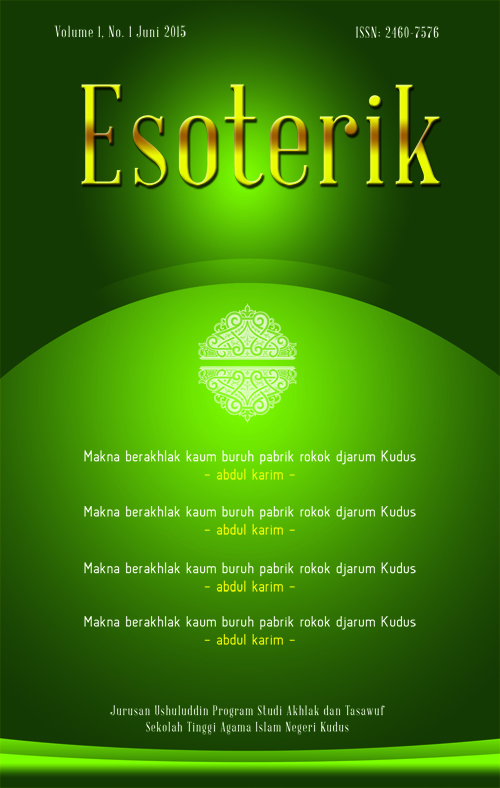
Esoterik : Jurnal Akhlak dan Tasawuf
Published by Program Studi Tasawuf dan Psikoterapi, Fakultas Ushuluddin collaborated with Konsorsium Tasawuf dan Psikoterapi Indonesia (Kotaterapi), Institut Agama Islam Negeri Kudus
Jl. Conge Ngembalrejo Bae Kudus Po Box. 51
Phone: +62291-432677
Website: http://journal.stainkudus.ac.id/index.php/esoterik
Email: [email protected]/[email protected]
ISSN 2460-7576 (print) | EISSN 2502-8847 (online)

Esoterik: Jurnal Akhlak dan Tasawuf by Program Studi Tasawuf dan Psikoterapi Fakultas Ushuluddin Institut Agama Islam Negeri Kudus is licensed under a Creative Commons Attribution-ShareAlike 4.0 International License.