






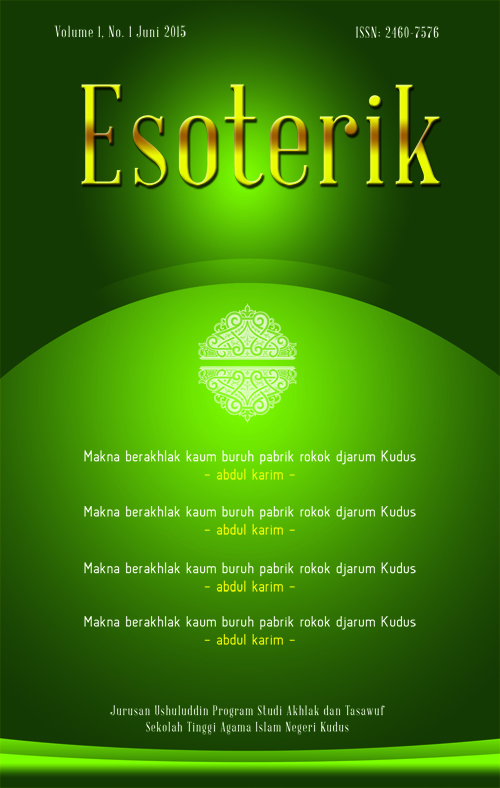



Revisiting Hamka’s Concept of Qana’ah in Responding to Materialism in the Society 5.0 Era
Abstract
Accelerated technological advancement in the Society 5.0 era has intensified digital consumerism and materialism, thereby disrupting spiritual balance and affecting individuals' social, economic, and psychological well-being. This study examines Hamka's concept of qana'ah as a socio-spiritual ethical response to contemporary materialism. It employs qualitative library research with a hermeneutic approach to analyze Hamka's major works and relevant literature on Sufism and materialism. The findings show that Hamka interprets qana'ah as wholehearted acceptance of God's decree while balancing worldly endeavor with spiritual fulfillment. Rather than encouraging passivity, qana'ah cultivates sincerity, patience, and trust in God as ethical foundations for controlling greed, excessive ambition, and consumerist behavior. Internalizing qana'ah in daily life helps individuals maintain inner peace while reducing the negative effects of materialism on social, psychological, and spiritual well-being. This study concludes that Hamka's concept of qana'ah offers a sustainable socio-spiritual ethical framework for balancing material progress with spiritual well-being in contemporary society.
Keywords
Full Text:
PDFReferences
al-Attas, S. M. N. (1993). Islam and Secularism (2nd edn). ISTAC (International Institute of Islamic Thought and Civilization).
al-Attas, S. M. N. (2001). Prolegomena to the Metaphysics of Islam. ISTAC (International Institute of Islamic Thought and Civilization).
Al-Qusyairi, A. A.-Q. A. bin H. (1971). AR-RISALAH AL-QUSYAIRIYAH (7th edn). Dar Al-Kutub Al-Islamiyah. http://www.al-ilmiyah.com
Amin, M. Y. (2020). Epistemologi Tasawuf Modern Hamka. Nizham Journal of Islamic Studies, 8(1). https://doi.org/https://doi.org/10.21093/nizham.v8i1.2090
Amstrong, K. (2009). The Case for God: What Religion Really Means. The Bodley Head.
Arisandi, H. (2015). Buku Pintar Pemikiran Tokoh-Tokoh Sosiologi dari Klasik sampai Modern. IRCiSoD.
Asyadily, M. H. (2022). Telah Konsep Yakin Menurut Sufi Imam Al-Qusyairi dalam Risalah Al-Qusyairiyah. EAIC: Esoterik Annual International Conferences, 1(01).
Beller, J., & Lovink, G. (2021). The Digital Attention Economy: Design, Data, and Psychological Manipulation. New Media & Society, 23(5). https://doi.org/https://doi.org/10.1177/1461444820934658
Creswell, J. W., & Creswell, J. D. (2020). Research Design: Qualitative, Quantitative, and Mixed Methods Approaches (5th edn). SAGE Publications.
Denzin, N. K. (2022). The Research Act: A Theoretical Introduction to Sociological Methods. Routledge.
Hadiwijono, H. (1980.). Sari Sejarah Filsafat Barat 1: Zaman Yunani Kuno dan Abad Pertengahan. Kanisius.
Hamka. (1981). Tasauf Moderen (18th edn). Yayasan Nurul Islam.
Hamka. (1994). SEJARAH UMAT ISLAM. Pustaka Nasional.
Hamka. (2001). Lembaga Budi (10th edn). Pustaka Panjimas.
Hamka. (2002). Falsafah Hidup. Pustaka Panjimas.
Hamka. (2019). Tasauf Modern. Republika Penerbit.
Hardiman, F. B. (2007). Filsafat Modern; Dari Machiavelli Sampai Nietzche. Gramedia Pustaka Utama.
Heidegger, M. (1962). Being and Time (J. Macquarrie & E. Robinson, Trans.). Harper & Row.
Helliwell, J. F., Layard, R., Sachs, J. D., De Neve, J.-E., Aknin, L. B., & Wang, S. (2023). World Happiness Report 2023. Sustainable Development Solutions Network.
Hidayat, K. (2020). Relevansi Pemikiran Tasawuf Hamka dalam Konteks Spiritualitas Kontemporer. Studia Islamika, 27(2). https://doi.org/https://doi.org/10.36712/sdi.v27i2.16576
Ihsan, N. H. (2002). Hamka’s Doctrine of Zuhd. Kalimah: Jurnal Studi Agama Dan Pemikiran Islam, 1(1).
Ihsan, N. H. (2003). Hamka’s Doctrine of Tawakkul (Trust in God). Kalimah: Jurnal Studi Agama Dan Pemikiran Islam, 2(2).
Ihsan, N. H., & Alfiansyah, I. M. (2021). Konsep Kebahagiaan dalam buku Tasawuf Modern karya Hamka. Analisis: Jurnal Studi Keislaman, 21(2).
Ihsan, N. H., & Indallah, S. M. (2018). Kemoderenan Dalam Konsep Tasawuf Modern Buya Hamka. Jurnal Penelitian, 12(2).
Ihsan, N. H., Kusuma, A. R., Uswatunnissa, N., & Maulidia, R. (2023). The Key to Happiness in a Sufistic Perspective: Between Classical Sufis and Contemporary Sufis. Al-Afkar, Journal For Islamic Studies, 6(4).
Kabat-Zinn, J. (2020). Mindfulness for Beginners: Reclaiming the Present Moment and Your Life. Sounds True.
Kamus Mu’ashiroh. (n.d.). Retrieved https://dictionary.ksaa.gov.sa/result/qana’ah
Kasser, T. (2022). The High Price of Materialism. MIT Press.
Kitchenham, B., & Charters, S. (2007). Guidelines for Performing Systematic Literature Reviews in Software Engineering [EBSE Technical Report]. Keele University & University of Durham.
Lestari, Y. S. (2018). Environmentalism dan Green Politics: Pembahasan Teoretis. Jurnal Community, 2(2). https://doi.org/10.35308/jcpds.v2i2.137
Maxwell, J. A. (2021). Qualitative Research Design: An Interactive Approach (3rd edn). SAGE Publications.
Mayring, P. (2020). Qualitative Content Analysis: Theoretical Foundation and Basic Procedures. Qualitative Social Research, 21(2), Art. 15. https://doi.org/https://doi.org/10.17169/fqs-21.2.3453
Miles, M. B., Huberman, A. M., & Saldaña, J. (2020). Qualitative Data Analysis: A Methods Sourcebook (4th edn). SAGE Publications.
Millburn, J. F., & Nicodemus, R. (2021). Love People, Use Things: Because the Opposite Never Works. Celadon Books.
Moleong, L. J. (2021). Metodologi Penelitian Kualitatif (Revision). PT. Remaja Rosdakarya.
Muhtadi, B. (2022). Oligarki, Korupsi Politik, dan Kemunduran Demokrasi di Indonesia. Jurnal Politik, 7(1). https://doi.org/https://doi.org/10.7454/jp.v7i1.493
Mumtaha, H. A., & Khoiri, H. A. (2019). Analisis Dampak Perkembangan Revolusi Industri 4.0 dan Society 5.0 Pada Perilaku Masyarakat Ekonomi (E-Commerce). JURNAL PILAR TEKNOLOGI : Jurnal Ilmiah Ilmu Ilmu Teknik, 4(2). https://doi.org/10.33319/piltek.v4i2.39
Nadia Wardani, P., Widjanarko, W., & Herawati, E. (2021). Media Sosial dan Perilaku Konsumtif: Studi Korelasional pada Generasi Z di Indonesia. Jurnal Komunikasi Indonesia, 10(1). https://doi.org/https://doi.org/10.7454/jki.v10i1.13472
OECD. (2020). Beyond Growth: Towards a New Economic Approach. OECD Publishing. https://doi.org/10.1787/33a25ba3-en
Palmer, R. E. (2021). Hermeneutics: Interpretation Theory in Schleiermacher, Dilthey, Heidegger, and Gadamer. Northwestern University Press.
Piketty, T. (2020). Capital and Ideology. Harvard University Press.
Sarbini, M. (2021). Teknik Penelusuran Literatur Ilmiah di Era Digital. Jurnal Perpustakaan Dan Informasi, 5(2). https://doi.org/https://doi.org/10.17509/jpi.v5i2.34527
Sartre, J.-P. (1943). Being and Nothingness. Gallimard.
Schwab, K. (2016). The Fourth Industrial Revolution. World Economic Forum.
Schwab, K., & Vanham, P. (2021). Stakeholder Capitalism: A Global Economy that Works for Progress, People and Planet. Wiley.
Stiglitz, J. E. (2019). People, Power, and Profits: Progressive Capitalism for an Age of Discontent. W.W. Norton & Company.
Syukri Salleh, M., & Osmani, A. H. (n.d.). Contemporary Islamic Economic Studies on Maqasid Shari’ah: A Systematic Literature Review. Humanomics, 36(4). https://doi.org/https://doi.org/10.1108/H-05-2019-0055
Trisnawati, Y. I. (2019). Pengaruh dan Materialisme dan Financial Attitude Terhadap Perilaku Menabung Keluarga Muda di Jawa Timur Dengan Impulsive Buying Sebagai Variabel Mediasi.
Yunus, F. M. (2019). Materialisme (H. Amin, Ed.). Fakultas Ushuluddin dan Filsafat UIN AR-Raniry dan PT. Bambu Kuning Utama.
Yusainy, C., Nurwanti, R., Dharmawan, I. R. J., Andari, R., Mahmudah, M. U., Tiyas, R. R., Husnaini, B. H. M., & Anggono, C. O. (2019). MINDFULNESS SEBAGAI STRATEGI REGULASI EMOSI. Jurnal Psikologi, 17(2), 174. https://doi.org/10.14710/jp.17.2.174-188
Zaenudin, A. (2022). Paradoks Kemewahan di Tengah Kemiskinan: Kasus Elit Desa dan Kesenjangan Sosial di Pedesaan. Jurnal Sosiologi Reflektif, 16(2). https://doi.org/https://doi.org/10.14421/jsr.v16i2.2409
Zahri, A. (2023). Penguatan Iman Modal Menghadapi Materialisme, Sukularisme dan Nativisme. Retrieved https://pa-sungguminasa.go.id/pdf/Artikel_Pengadilan
DOI: http://dx.doi.org/10.21043/esoterik.v12i1.33290
Esoterik : Jurnal Akhlak dan Tasawuf
Published by Program Studi Tasawuf dan Psikoterapi, Fakultas Ushuluddin collaborated with Konsorsium Tasawuf dan Psikoterapi Indonesia (Kotaterapi), Institut Agama Islam Negeri Kudus
Jl. Conge Ngembalrejo Bae Kudus Po Box. 51
Phone: +62291-432677
Website: http://journal.stainkudus.ac.id/index.php/esoterik
Email: [email protected]/[email protected]
ISSN 2460-7576 (print) | EISSN 2502-8847 (online)

Esoterik: Jurnal Akhlak dan Tasawuf by Program Studi Tasawuf dan Psikoterapi Fakultas Ushuluddin Institut Agama Islam Negeri Kudus is licensed under a Creative Commons Attribution-ShareAlike 4.0 International License.